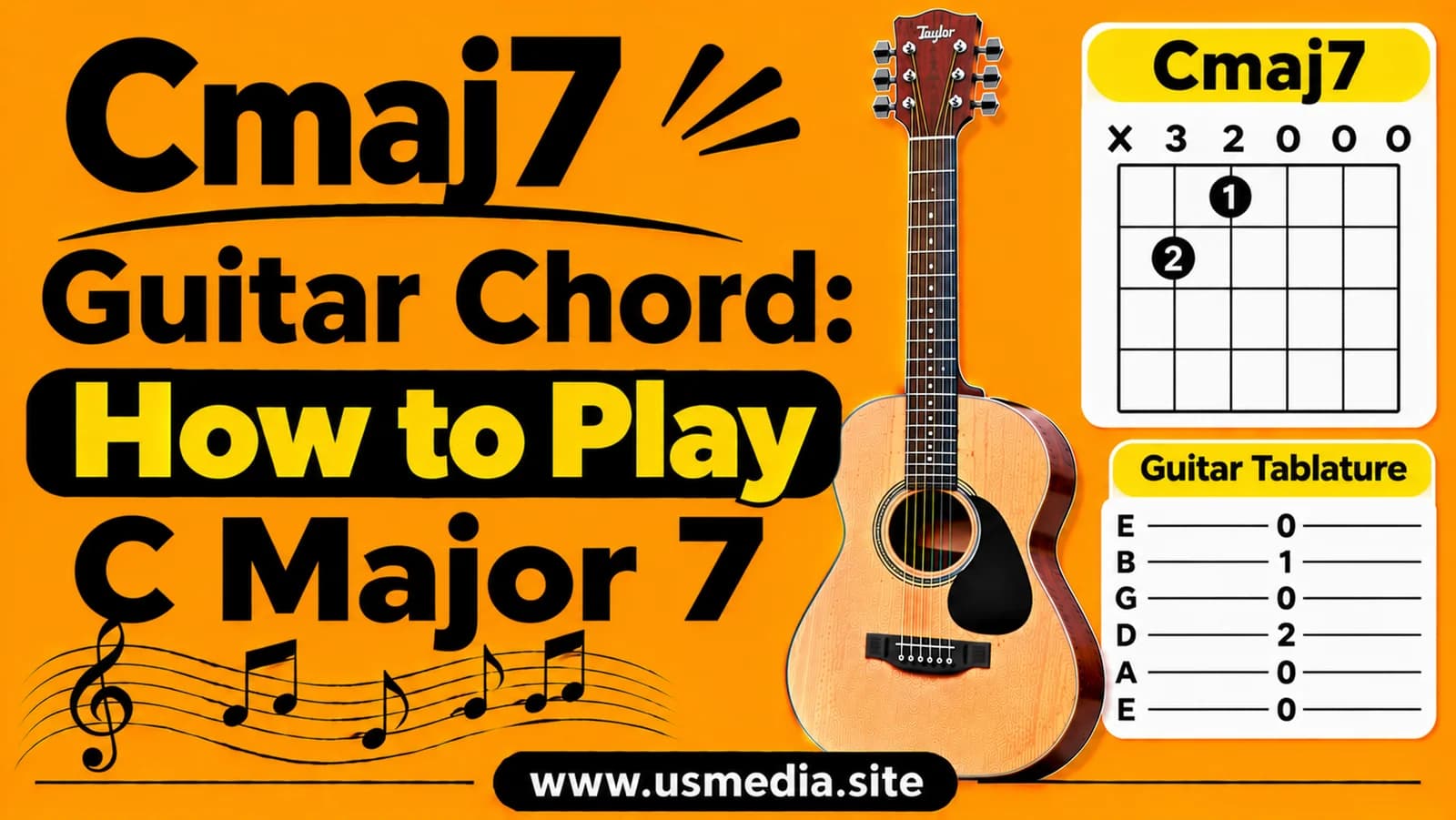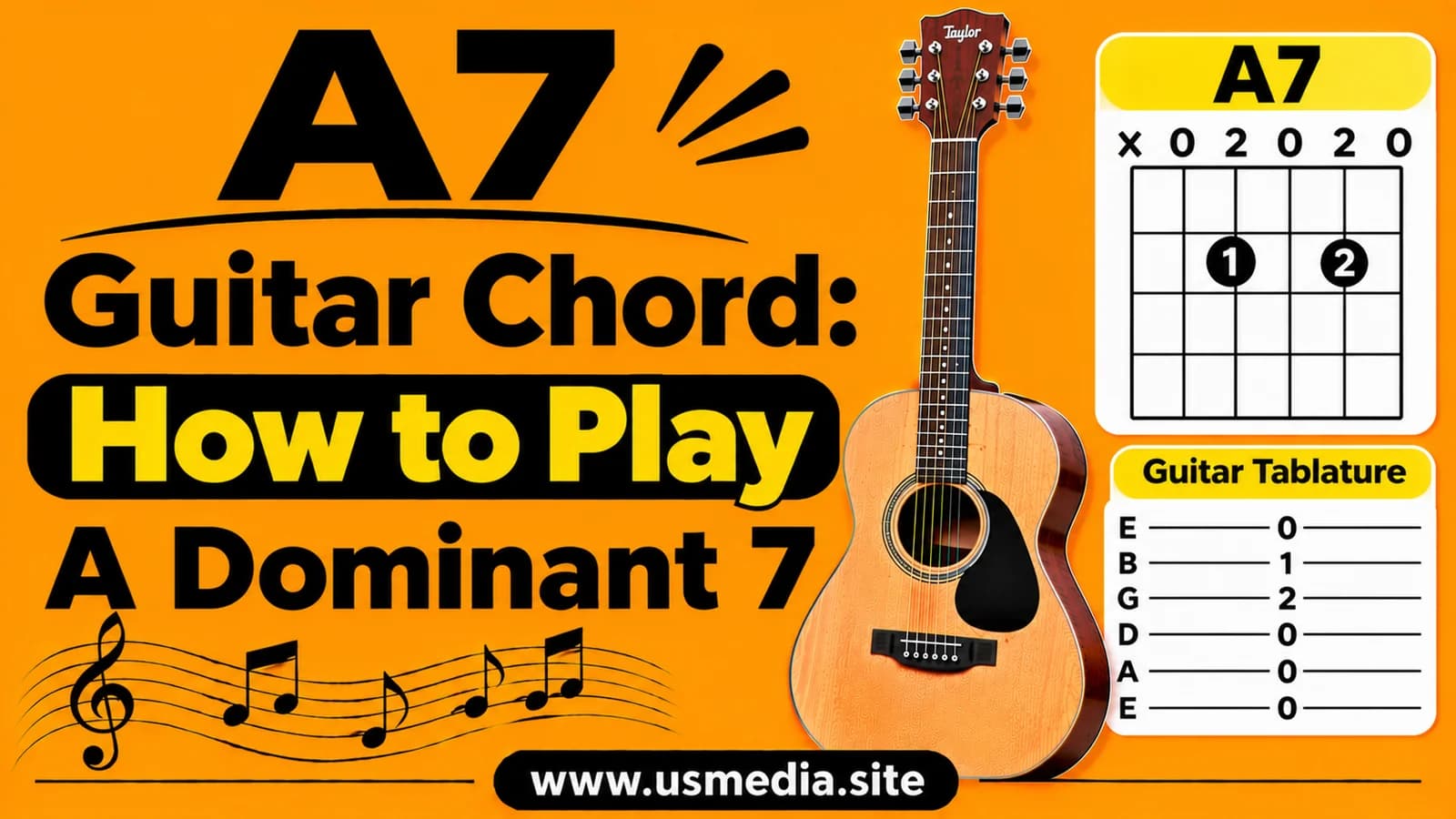
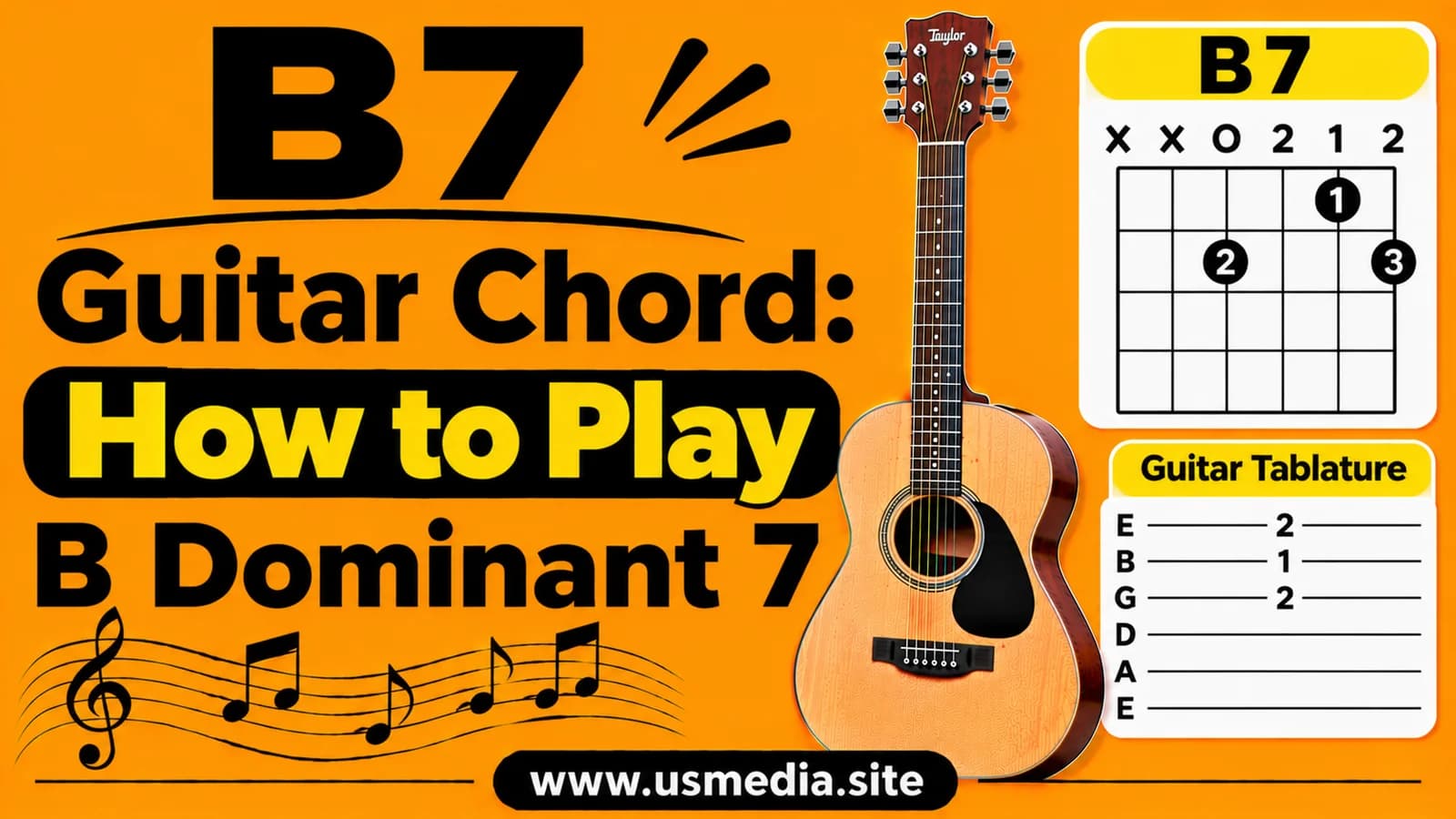
The open B7 shape asks four fingers to fit into the first two frets while the B string between them must keep ringing. That makes it easy to mute a note even when the chord looks right. We’ll map the shape string by string, explain the notes that make it a dominant seventh, and practice its familiar move to E with the practical approach we use at usmedia.site.
Play the open B7 chord
In standard tuning, the open B7 chord is commonly played as x21202. Read the tab from the lowest-pitched string to the highest:
String:  6  5  4  3  2  1
Note:    E  A  D  G  B  E
B7: x 2 1 2 0 2- 6th string, low E: Do not play it.
- 5th string, A: Fret the 2nd fret.
- 4th string, D: Fret the 1st fret.
- 3rd string, G: Fret the 2nd fret.
- 2nd string, B: Leave it open.
- 1st string, high E: Fret the 2nd fret.
A standard fingering is index on D1, middle on A2, ring on G2, and pinky on high E2. Here, the number after a string name is its fret: D1 means the D string at the 1st fret. Place each fingertip just behind its fret wire. Keep your fingers curved so the open B string can vibrate without being touched by your ring or pinky finger.
Start your strum at the A string and play down through the high...