
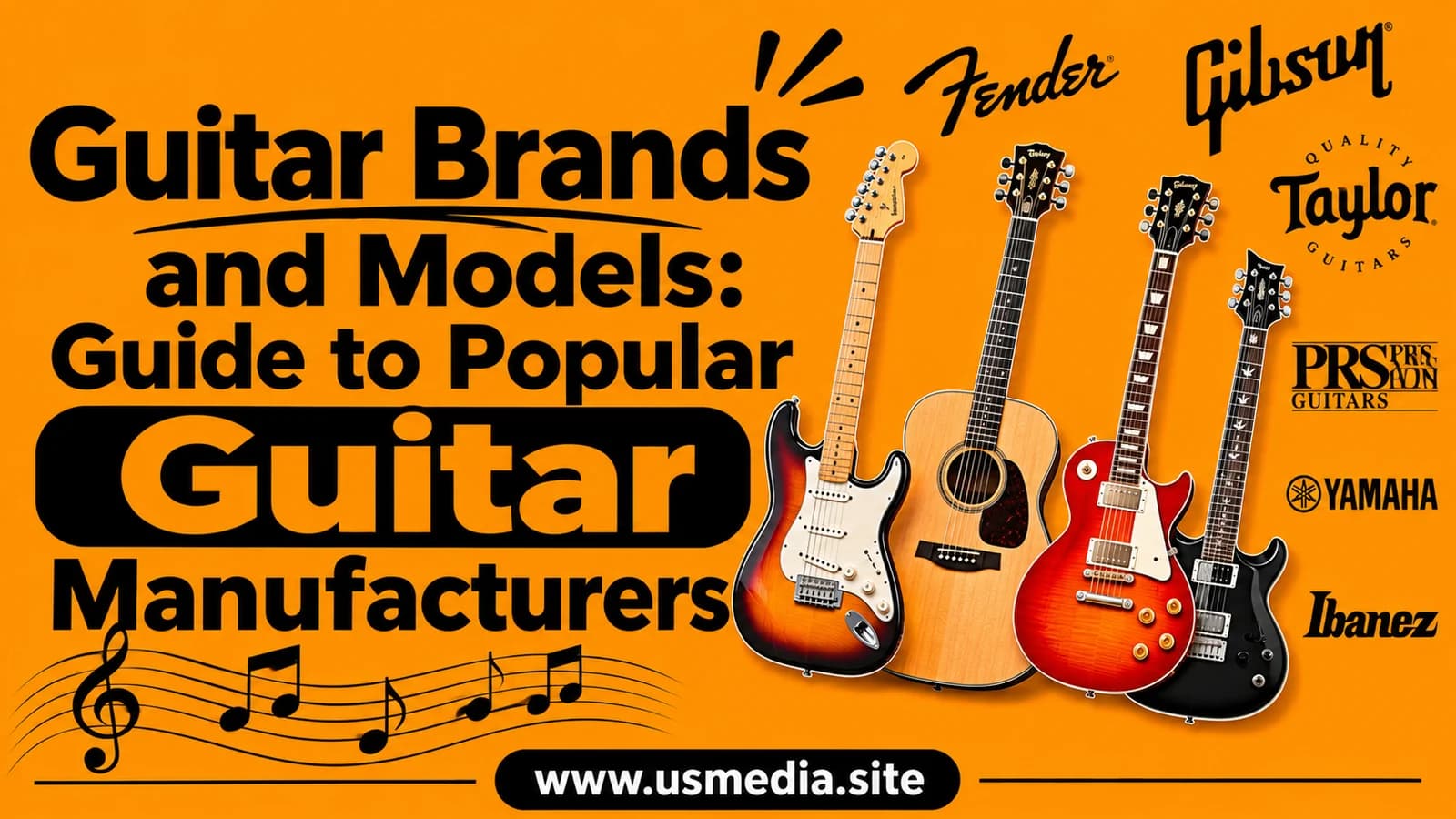
Shopping for a guitar can feel like learning a new vocabulary. One page lists Fender Stratocasters, another compares Gibson Les Pauls, and a third groups acoustic guitars into body shapes, series, and model numbers. It is easy to assume that a famous brand guarantees a certain sound or that one model family is automatically right for a beginner. Neither assumption is reliable.
The useful starting point is not “Which guitar brand is best?” It is “What kind of guitar do I need, what should it feel and sound like, and which specific models are worth comparing?” A brand offers a range of instruments. A model family gives you a design direction. The individual guitar you choose determines the actual setup, components, feel, and sound.
This guide explains how to read guitar brand and model names, how popular manufacturers organize their ranges, and how to compare instruments in a practical way. It is designed to help you build a shortlist, not to rank every maker or declare one guitar right for everyone.
What a guitar brand and model name actually tell you
A brand is the maker or label on the instrument. A model family is a recognizable design or line within that...