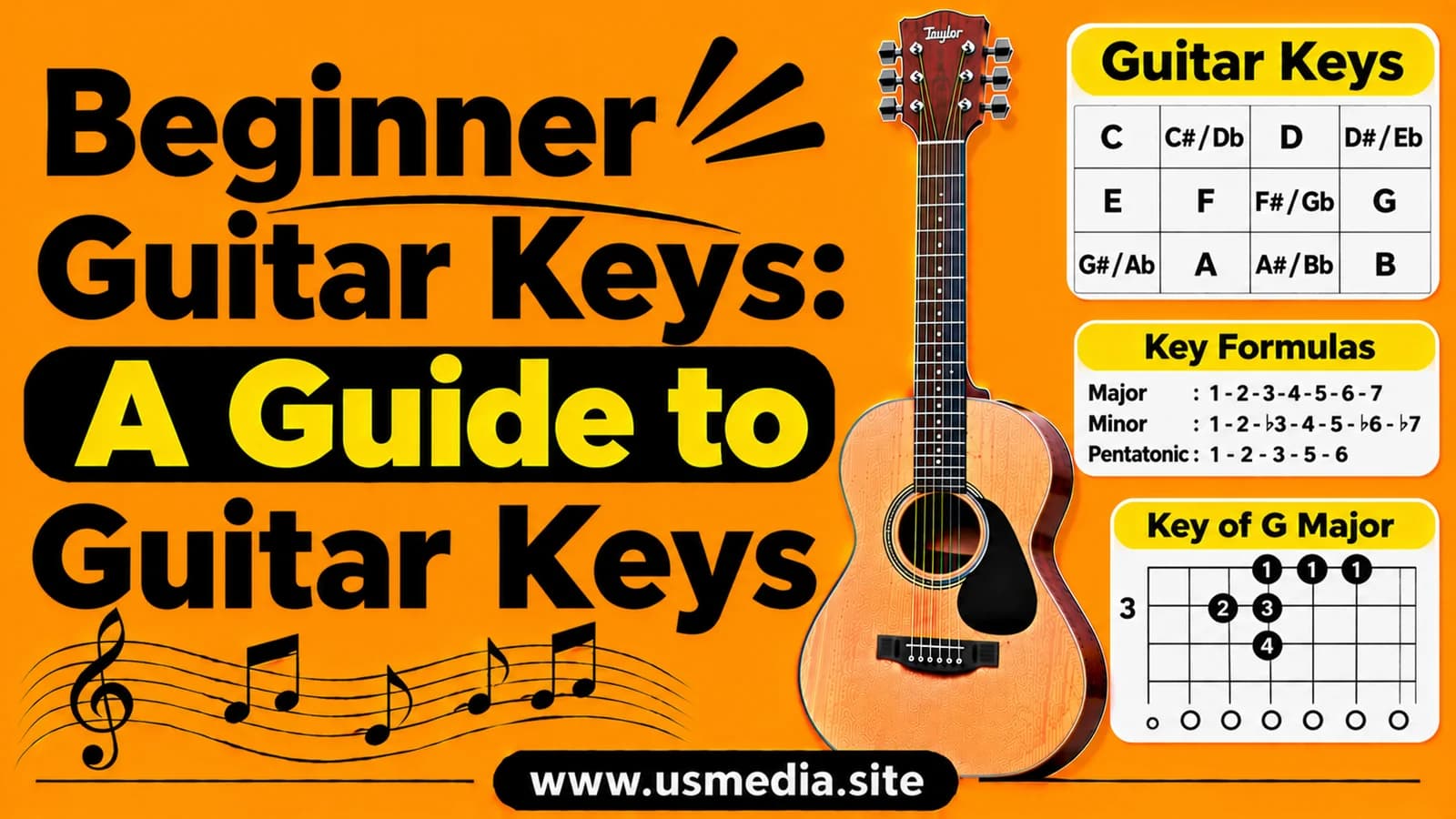
You know a handful of open chords, but a song chart suddenly says the song is in G, or a friend asks you to move it to A. What does the key tell you—and how does it help you choose chords or notes on the guitar? We’ll explain keys in practical terms, show how chords relate to a tonal center, and use an easy G-major progression to connect the theory to playing. That is the hands-on approach we take to music lessons on usmedia.site: understand just enough theory to make the next song easier to learn.
What does “key” mean in music?
A key is a musical framework organized around a central note and chord, called the tonic. The key helps describe which notes and chords are likely to feel connected, and which note or chord tends to feel like a point of rest. For example, in G major, G is the tonic. A song in G major will often use notes from the G major scale and chords built from those notes.
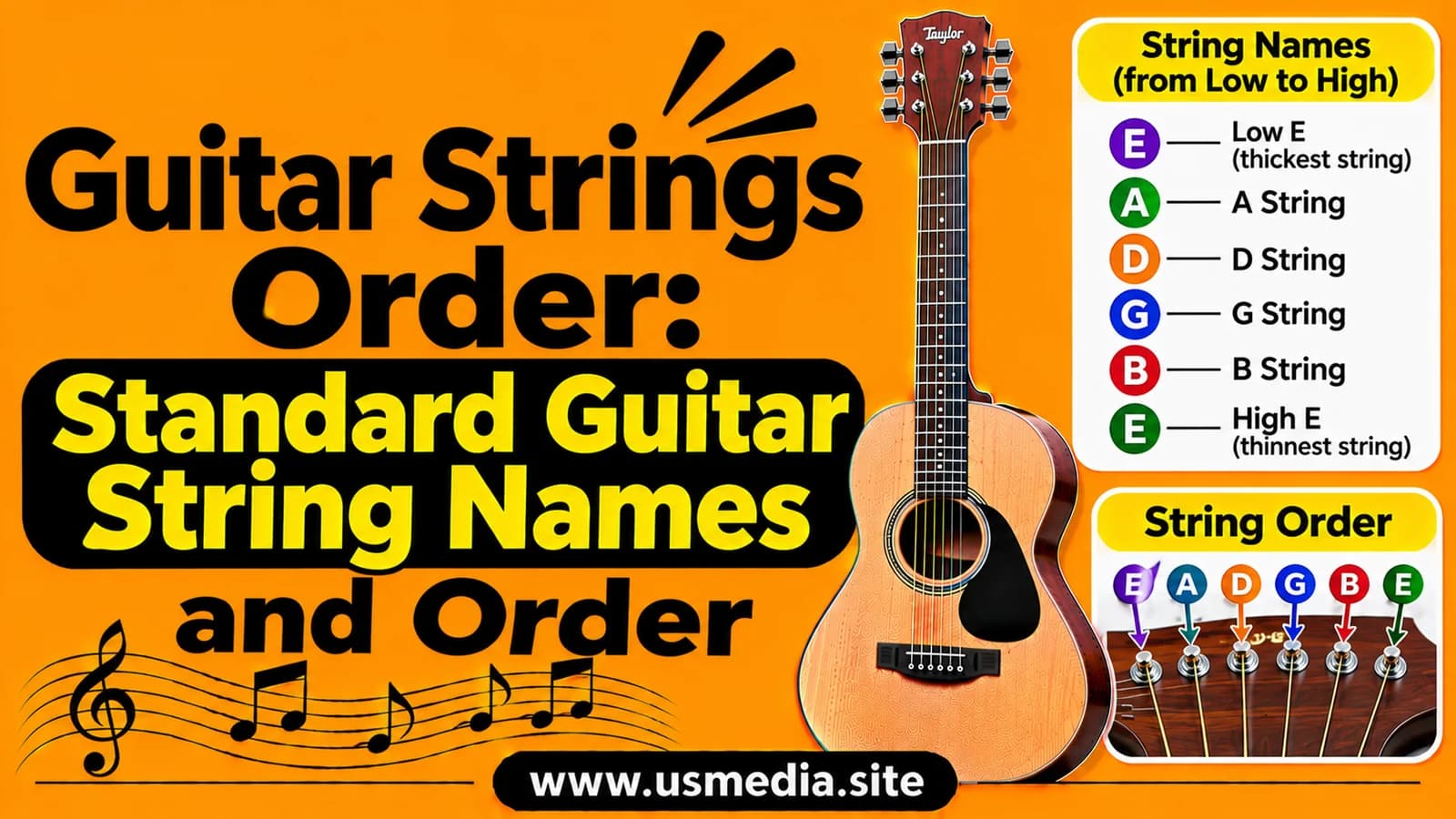
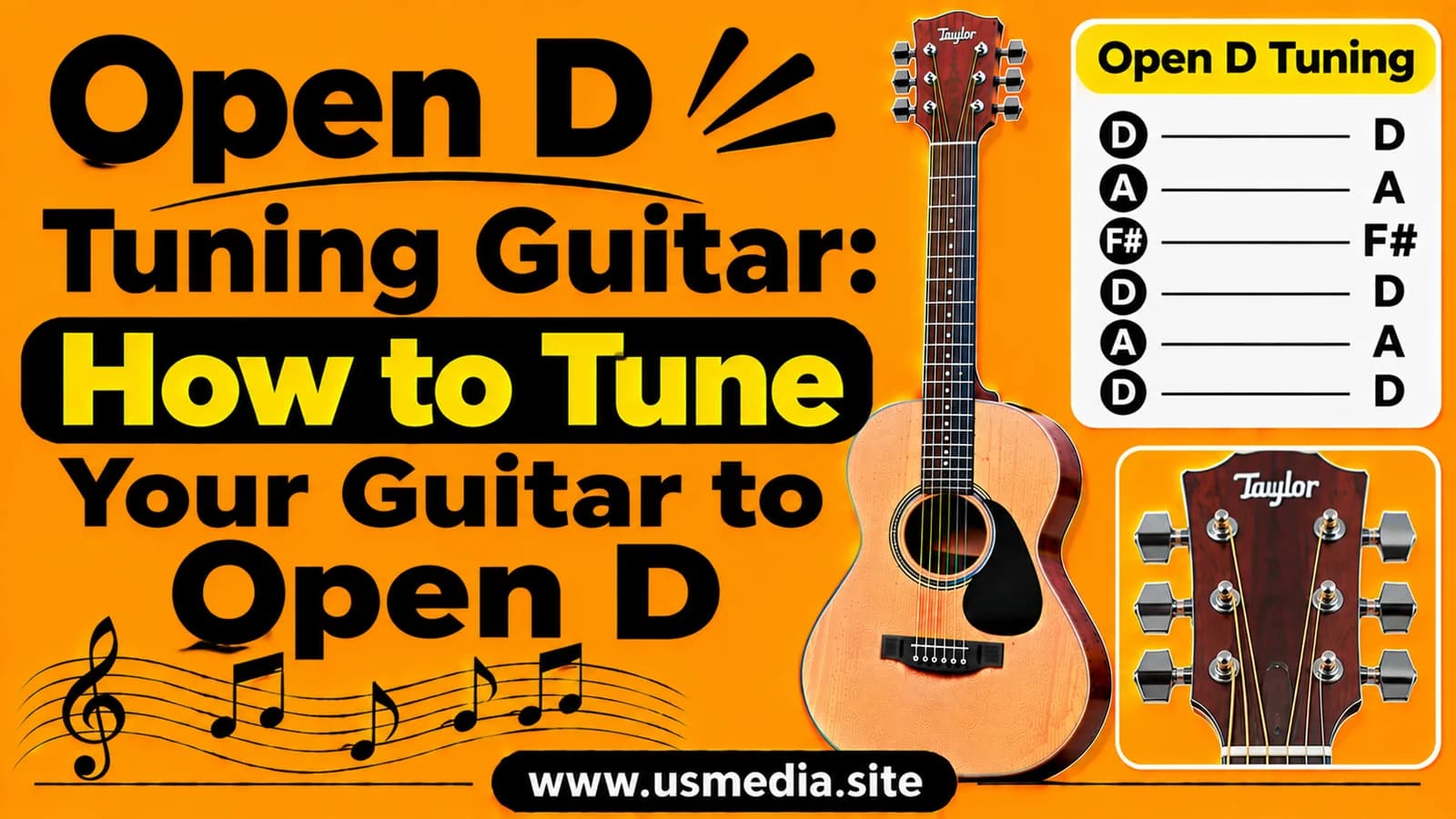
A key is not simply a list of chords, and it is not the same thing as a guitar tuning. The key describes the music’s tonal center and pitch relationships. Tuning describes the pitches of the guitar’s open strings. In standard tuning, those strings are E–A–D–G–B–E,...