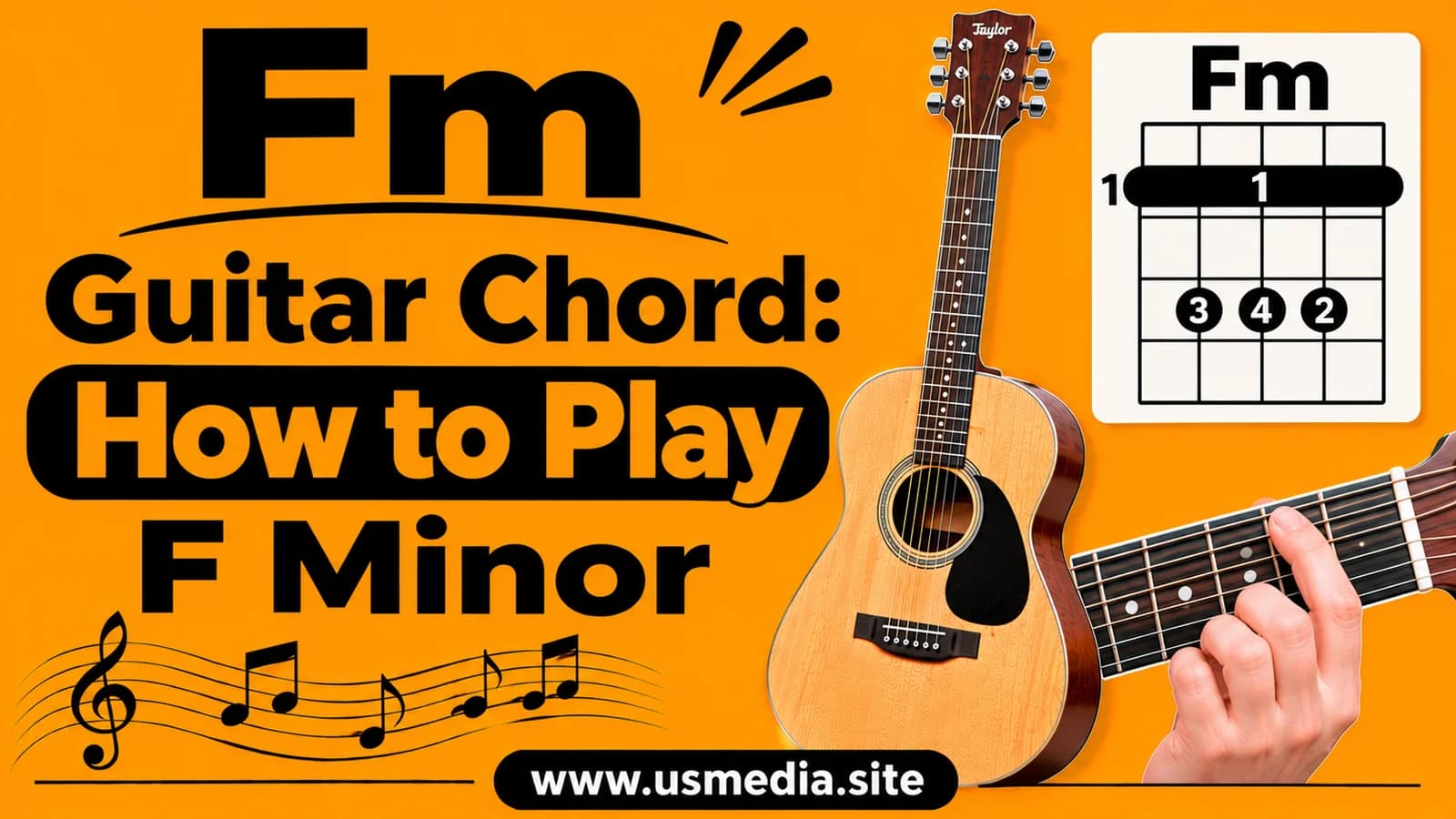
The F minor guitar chord can be a first barre-chord challenge, but you do not have to begin with the hardest version. Learn the notes in Fm, then choose among a full six-string barre, a compact first-position voicing, or a higher-position shape. Each has a different range and feel, so the best choice depends on the part you are playing and which notes you need in the bass.
What makes a chord F minor?
An F minor triad contains three notes: F, A♭, and C. F is the root, A♭ is the minor third, and C is the fifth. In scale-degree shorthand, the formula is 1–♭3–5. The lowered third is what distinguishes F minor from F major: F major uses A natural instead of A♭.
A guitar chord shape may sound more than three notes because some chord tones are doubled in different octaves. For example, the full Fm shape below contains two Fs and two Cs, but its pitch classes are still only F, A♭, and C. If all three chord tones are present, the chord can still be identified as Fm even when the voicing leaves out a doubled note.
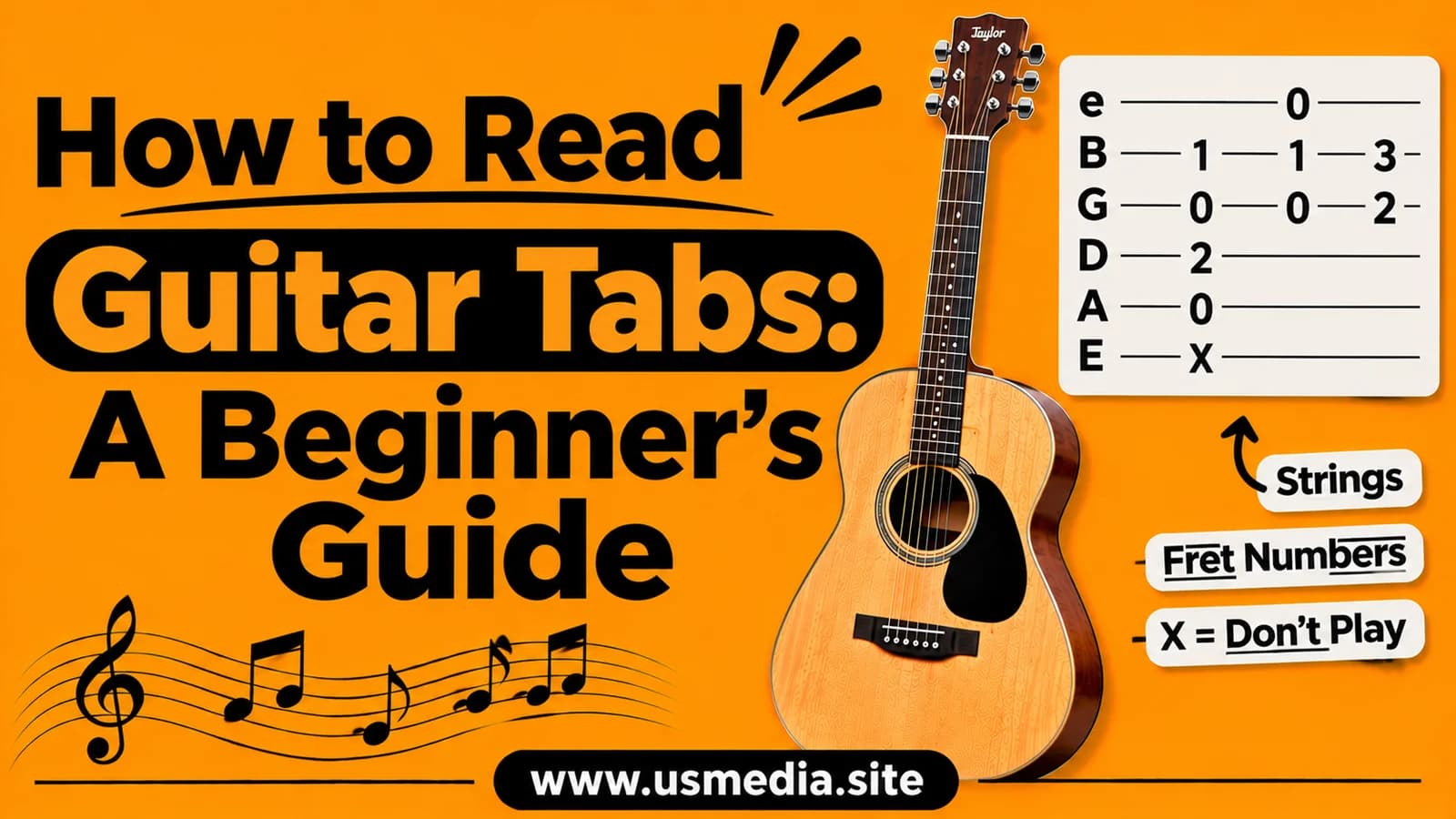
The diagrams in this lesson assume standard tuning, from the thickest string to the thinnest: E–A–D–G–B–E. Read each row from string 6 to...