A scale pattern can look easy under your fingers and still leave you unsure what key you are in. That is because a shape shows where notes sit on the neck, but it does not explain which note feels like home, how the notes relate, or whether your guitar is tuned for that pattern.
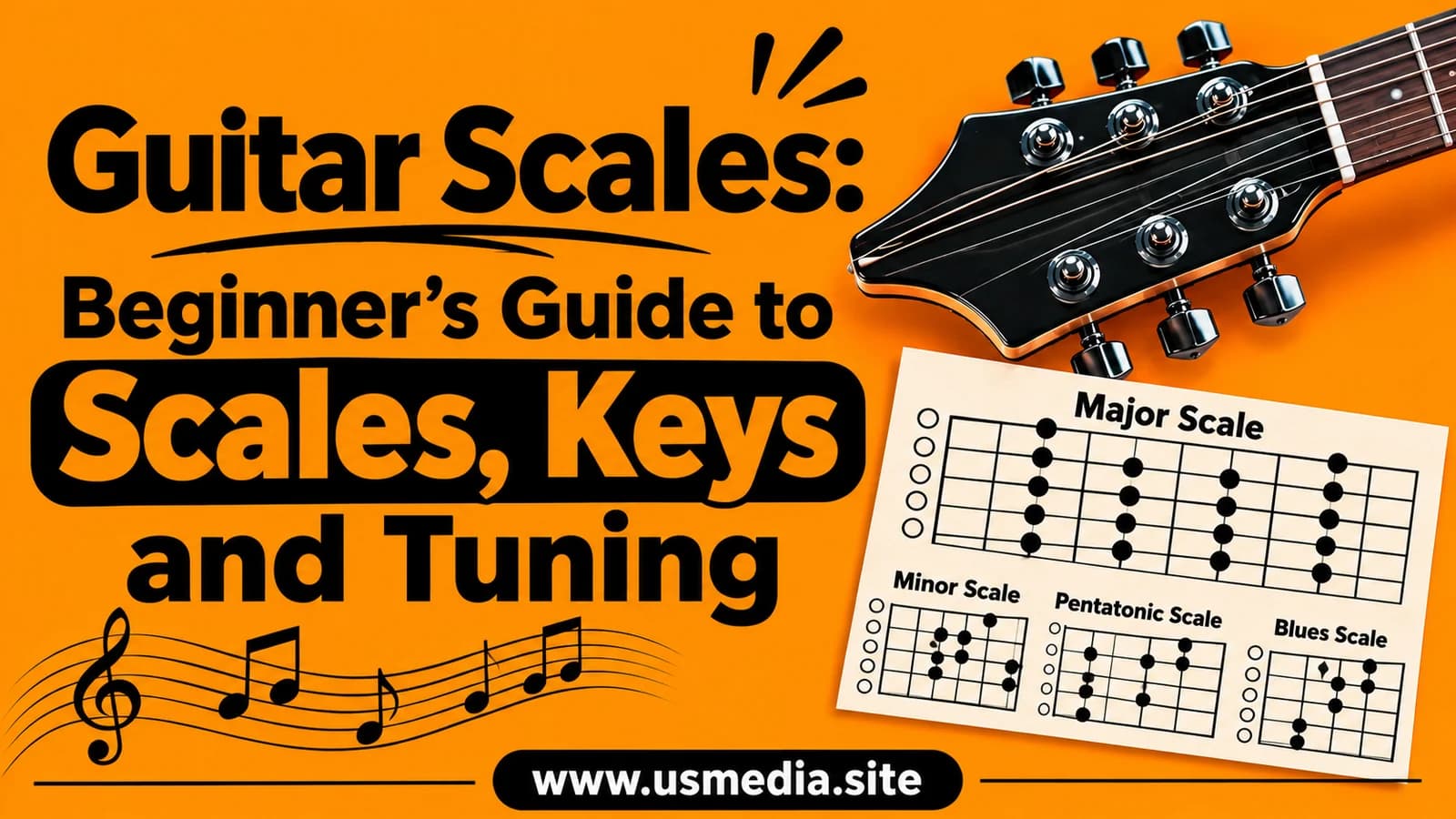
At usmedia.site, we approach scales as both a fretboard map and a listening tool. Start with the difference between a scale, a key, and a tuning, then use the examples below to play a major scale and a pentatonic shape with purpose instead of memorizing a box without context.
What is a guitar scale?
A scale is an organized set of notes arranged in order by pitch. Guitarists play scales to learn note locations, hear the distance between notes, build familiarity with the fretboard, and create melodies or solos. A scale is not just a finger pattern. The pattern is one way to reach the notes on the guitar.
Most beginner scales contain seven notes before the first note repeats an octave higher. Pentatonic scales use five notes. The name tells you something about the scale's sound and construction, while the root note tells you where the scale starts and what pitch acts as its center.
For example, C major contains...