We’ll start with the two-finger E7 shape, then show how its open D adds the dominant-seventh sound. That’s the practical approach behind our lessons on usmedia.site: learn the shape, hear what changes, and use it in a progression.
Play the open E7 chord
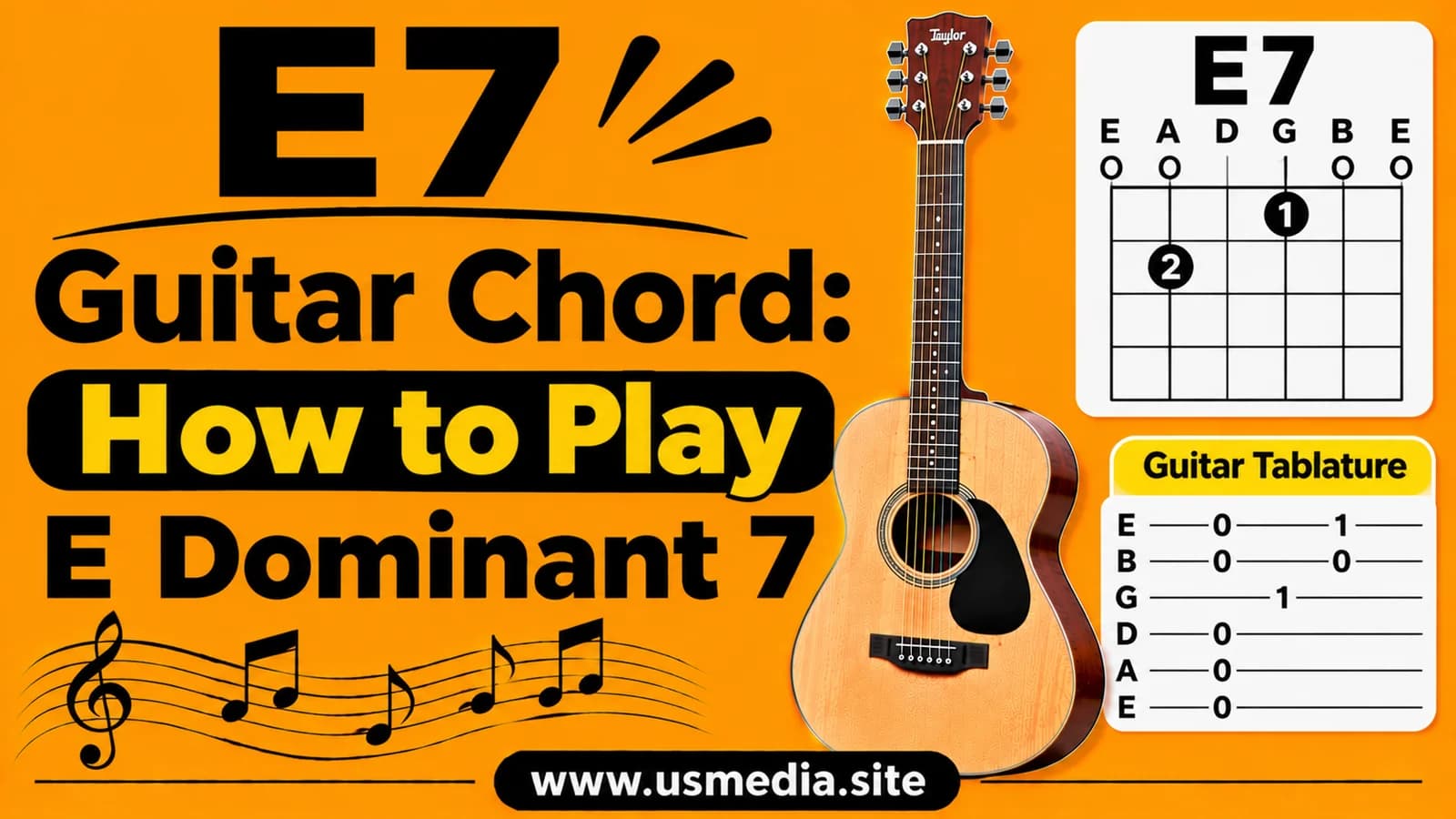
In standard tuning, the easiest common E7 shape is 020100, written from the low E string to the high E string. Put your middle finger on the A string at fret 2 and your index finger on the G string at fret 1. Leave the other strings open and strum all six strings.
High e|--0--  E
B     |--0--  B
G     |--1--  G#
D     |--0--  D
A     |--2--  B
Low E |--0--  E
The tab is shown from the highest string at the top to the lowest at the bottom, as usual. The six notes, read from low to high, are E–B–D–G#–B–E. Check each string separately before strumming. The open D string should ring clearly; it is an important part of the chord, not a string to mute.
What makes E7 a dominant seventh?
E7 contains four chord tones: E, G#, B, and D. E is the root, G# is the major third, B is the perfect fifth, and D is the minor seventh. The chord formula is 1–3–5–♭7. “Dominant seventh”...