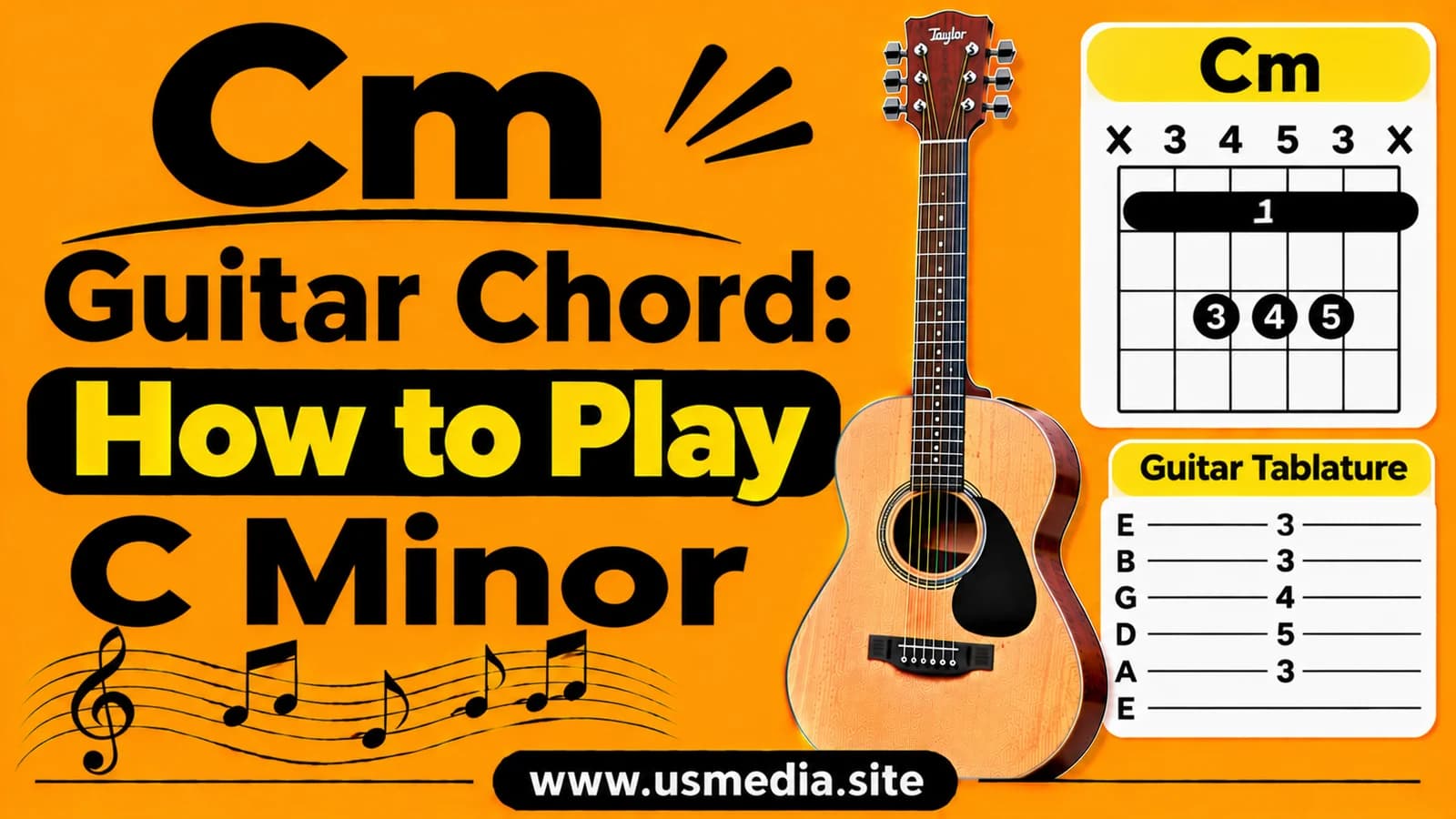
If Cm is the next chord in your song, the chart may send you straight to a barre shape that feels awkward across the first five strings. You do have options: a full A-string-rooted barre, a movable E-string shape, and smaller no-barre voicings that still contain the notes of C minor. We’ll show how each one works, how to keep the unwanted strings quiet, and how to use Cm in a progression at usmedia.site.
What notes make up C minor?
C minor, written Cm, contains C, E♭, and G. These are the root, minor third, and perfect fifth, or 1–♭3–5. The E♭ is the note that makes the triad minor.
C major contains C, E, and G. Compare the two chords and only one pitch name changes: E natural in C major becomes E♭ in C minor. On guitar, the shapes may look quite different, but listening for that lowered third helps you hear what the chord change is doing.
Play the common Cm barre chord at the 3rd fret
The standard five-string Cm shape is x35543. Read it from the lowest-pitched string to the highest:
String:  6  5  4  3  2  1
Note:    E  A  D  G  B  E
Cm:      x  3  5  5  4  3
The numbers are fret numbers, not finger numbers. An x means leave that string out or mute it; 0 means play...