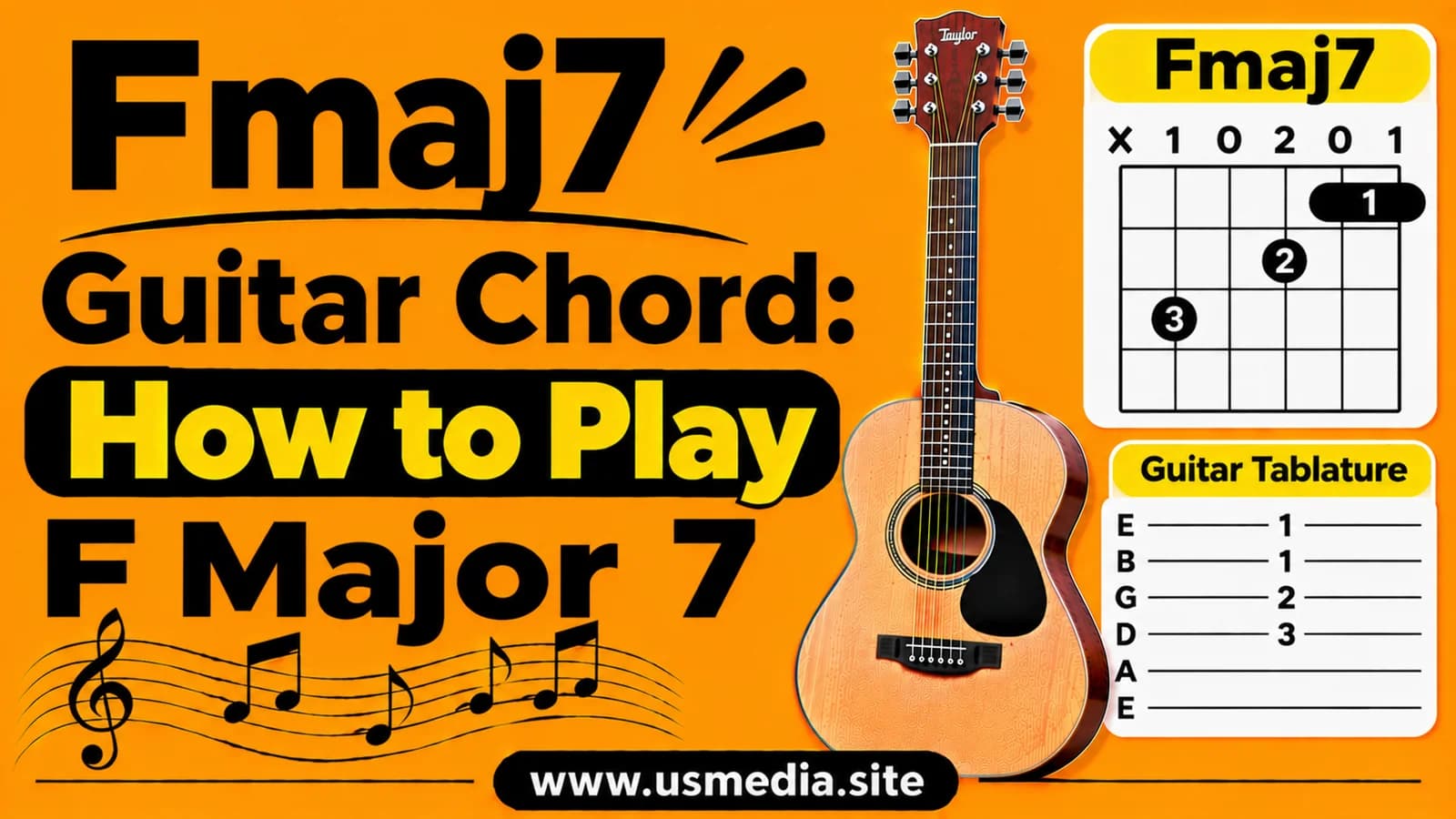
If an F chord feels like a hurdle, Fmaj7 may look like an easier way in—but the open high E changes the sound, and the A string still needs to stay out of the chord. We’ll show the no-barre shape, explain exactly which strings to play, and compare Fmaj7 with F and F7 so you can choose the right chord for the song. That’s the practical approach we take to guitar lessons on usmedia.site: learn the shape, hear the note that defines it, and use it in context.
What notes make up Fmaj7?
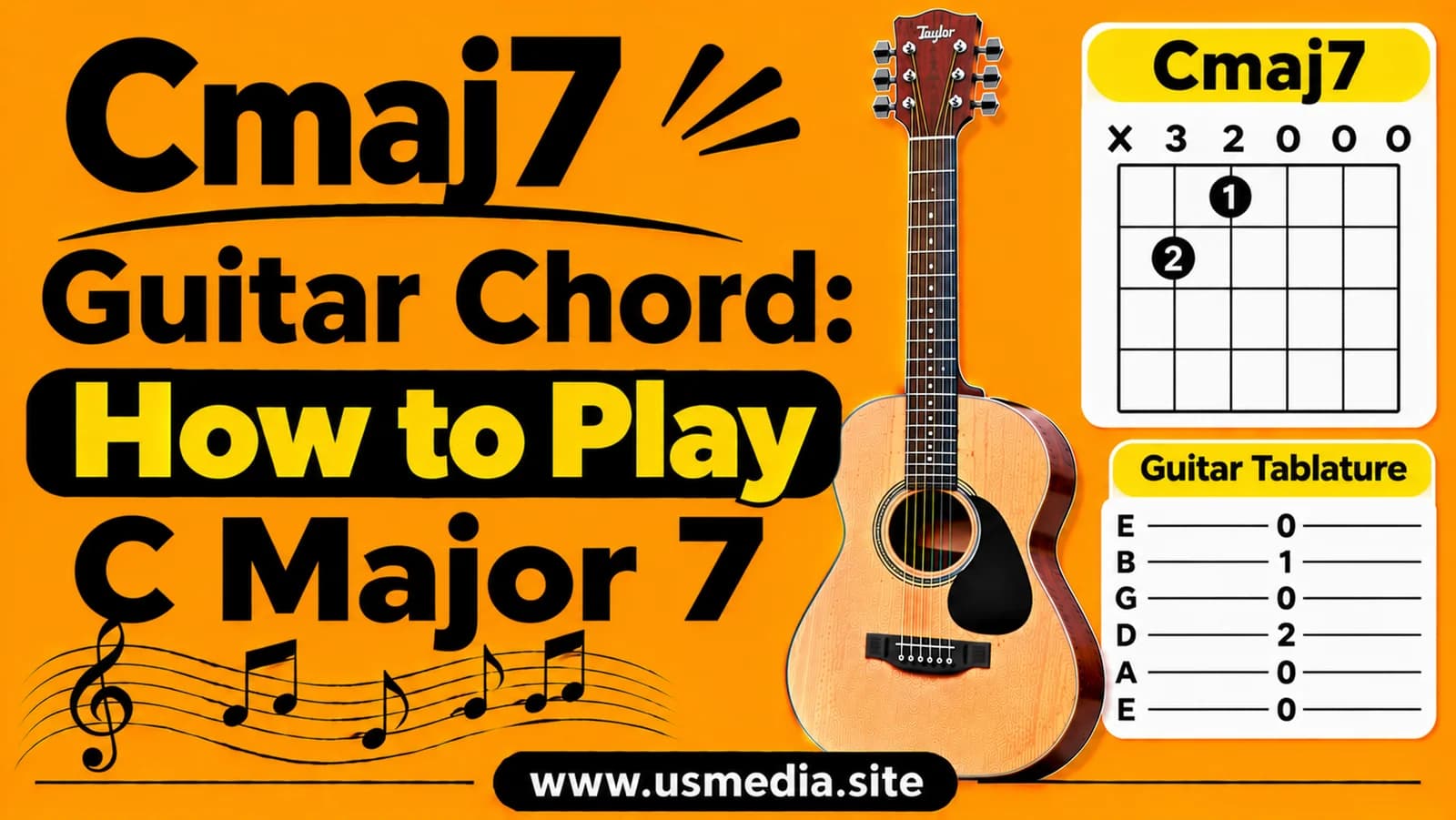
F major 7, usually written Fmaj7, contains F, A, C, and E. These are the root, major third, perfect fifth, and major seventh, or 1–3–5–7. The F major triad is F–A–C; E is the extra note that makes it a major seventh chord.
That E sits one half step below F. It is not the same as the E♭ in F7. F major contains F–A–C, Fmaj7 adds E, and F7 adds E♭. The small difference in the seventh changes the chord quality, so Fmaj7 and F7 are not interchangeable labels for one shape.
Play the open Fmaj7 chord: xx3210
The common beginner-friendly Fmaj7 shape is xx3210. It uses the four highest strings, requires no barre, and lets the high E string ring open.
String:...