The F-sharp minor chord can be a sticking point for newer players because its common full shape uses a barre. But you do not have to start by pressing all six strings at once. You can learn F#m as a three-string chord, move to a smaller partial barre, and work toward the full shape as your hand gets comfortable. Here at usmedia.site, we’ll walk through those options, show which strings to play, and give you a practical way to practise changes without forcing your grip.
F#m chord at a glance
F#m is short for F-sharp minor. Its three chord tones are F♯, A, and C♯: F♯ is the root, A is the minor third, and C♯ is the fifth. A chord shape may repeat these notes in different octaves, or leave out some doubled notes while still clearly expressing the chord.
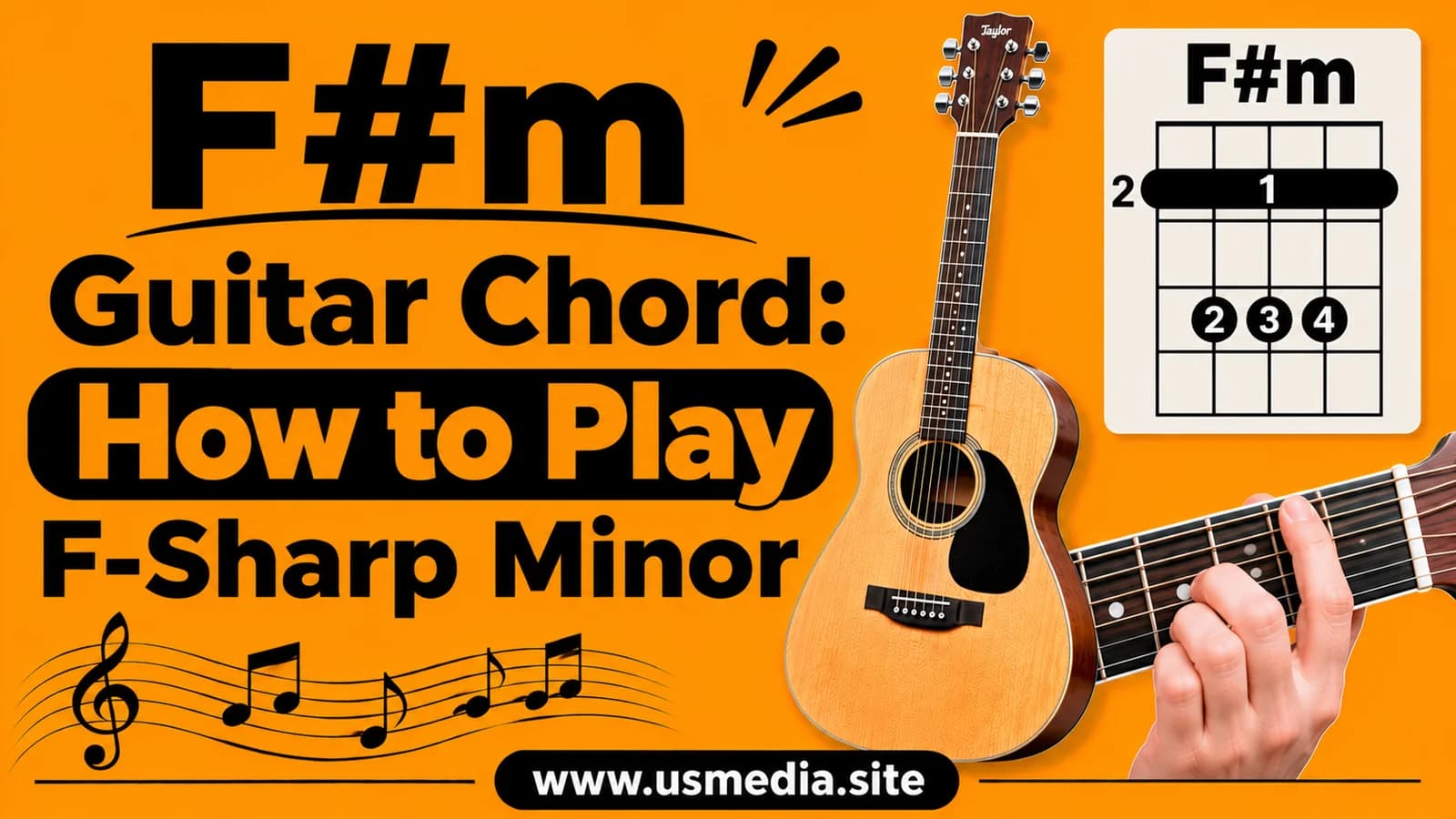
The shapes below are written from the thickest string to the thinnest, in standard tuning E–A–D–G–B–E. An x means do not play that string; a number shows the fret to press.
Three-string, no-barre:  xxx222
  Four-string, partial barre: xx4222
  Full six-string barre:  244222
If you are new to F#m, begin with xxx222. It uses three fingertips on the second fret of the G, B, and high E strings. It is...